Stakeholders Seek Solutions To Energy Crisis In Health Sector As Reports Say 40% of Functional Hospitals Lack Access To Electricity
Nigeria’s health facilities are not only underpowered, they are also inefficiently powered. A survey conducted by Sustainable Energy for All in 2021 shows that 40% of the functional Primary Health Centres (PHCs) facilities in Nigeria do not have access to electricity with majority of the remaining 60% receiving not more than 10 hours of daily power supply from various sources. A rapid assessment carried out earlier this year shows that Federal Tertiary Health Institutions requires between 3 -8 MW of energy to function optimally. The institutions receive an average of 5.3 hours of daily electricity from the national grid, have installed backup capacity of 0.8 – 3.3MW (about 50% backup deficiency) which is 80% generated through diesel engines, spending 20 – 180 million Naira per month to pay for power. Also, 20 – 50% of operating expenses in Federal Tertiary Health Institutions (FTHIs) goes into fuel purchase. This situation is not different in the private sector with 30% of respondents to a survey conducted in April 2025 by the Healthcare Federation of Nigeria reporting spending 5 – 20 million Naira on electricity monthly.
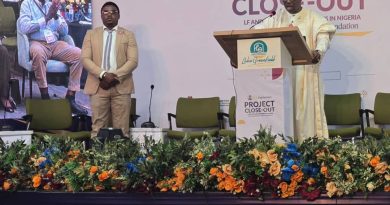
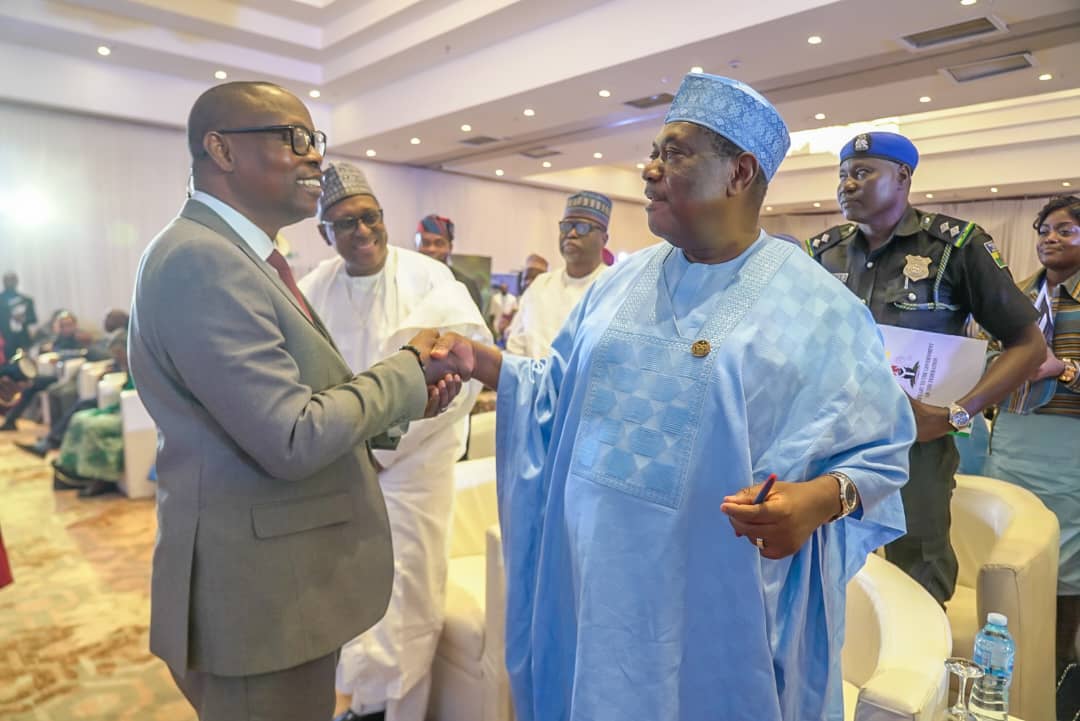
The Ministry of Health and Social Welfare organised a stakeholders meeting bringing together the health and power sectors in a bid to lay the right foundation and take progressive steps towards the attainment of energy sufficiency and sustainable electrification of public and private healthcare facilities in Nigeria. The event was held on Tuesday 9th September, 2025, at the State House Banquet Hall, Abuja.
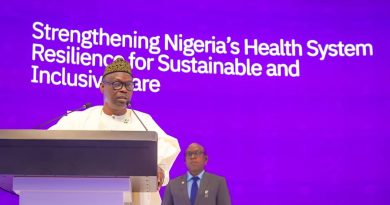
Delivering his keynote address, the Minister of State for Health and Social Welfare, Dr. Iziaq Adekunle Salako, said Since he assumed office about a year ago, he has conducted working visits to many Federal Tertiary Health Institutions in different geopolitical zones of the country and interacted with heads of health facilities at the sub-national level and also in the private sector. The familiarisation visits and interaction, Salako said gave him the opportunity to be directly exposed to the challenges being faced Health institutions in Nigeria.

” A major challenge being the deficits in electricity provision and the huge energy cost they have to bear every month. This finding is in consonance with the result of a survey carried out by BudgIT where health workers identified access to reliable electricity as the second leading barrier to improved healthcare delivery in Nigeria. Findings have also shown limited coordination between energy and health sector actors resulting in multiple health facilities electrification datasets and duplication of interventions. This scenario has resulted in sub-optimal service delivery by the healthcare system with resultant reduced access to care, compromised quality of treatment and poor health outcomes. Services have been disrupted, public health compromised, Nigerians subjected to hardships and many lives lost due to poor electricity supply. The summary is that energy supply has become a major disrupter of health services in our country. It has become an emergency that we must address if all the healthcare reforms and investments being made will achieve the desired result”, the Minister said.
He however noted that in attempting to solve the power issue in health facilities, Nigeria is not starting from ground zero. “The Federal Government has risen to this challenge through various initiatives including the ongoing efforts to electrify selected PHCs in the country. The Ministry of power throught its agencies like the Rural Electrification Agency (REA) has made commendable progress, deploying 100 containerized solar hybrid systems to healthcare facilities across Nigeria. We also have the Energizing Education Programme which is benefiting selected teaching hospitals like the University of Maiduguri Teaching Hospital and the University of Calabar Teaching Hospital. The European Union (EU) has launched the Nigeria Solar for Health Programme (NISHP), aiming to provide 24/7 power supply to 45 healthcare facilities across five states while doctors Without Borders (MSF) has been instrumental in introducing solar power in healthcare facilities in northern Nigeria, demonstrating how solar energy can ensure stable operations for medical devices and cold chains, even in challenging environments.
“These examples demonstrate that the transition to greener energy in our health sector is not merely a distant dream but a tangible reality with proven benefits. They provide valuable lessons and models for replication and scaling across the nation to address the challenge of health facilities electrification in our country.”
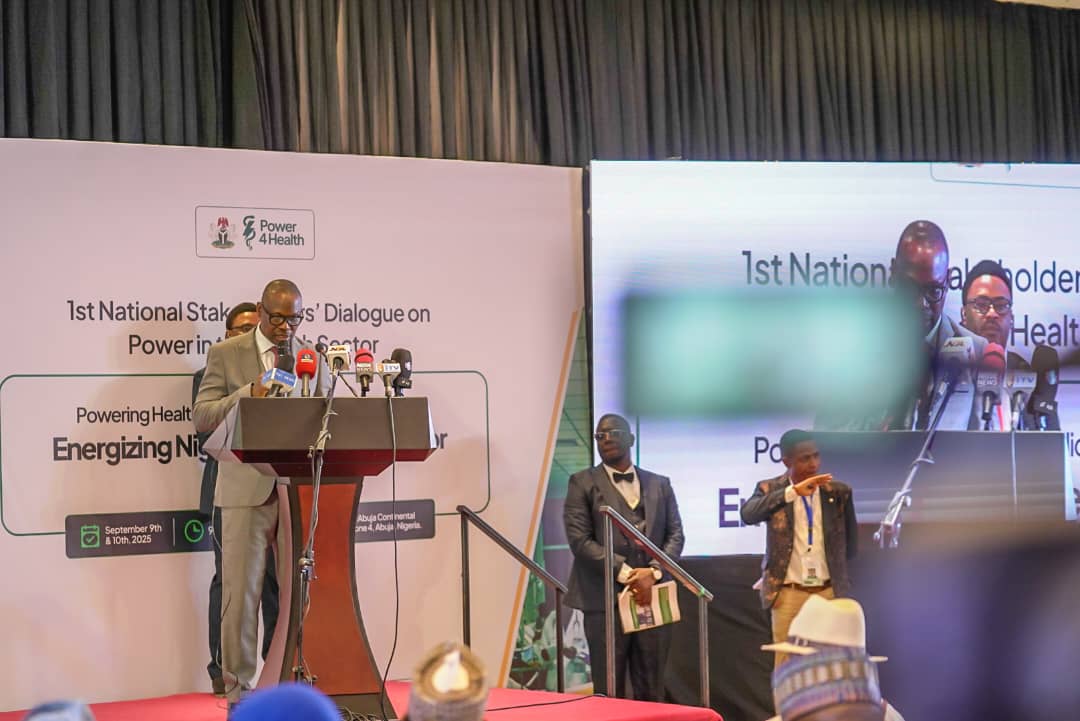
Salako said despite these efforts, health system in Nigeria is still faced with significant energy challenge with frequent media reports of outages and blackouts sometimes for weeks in many hospitals.
“The effort to resolve the power in health challenge are not happening at the rapid pace required and not being delivered at scale thus the need for a rethinking of the model being currently used. The current situation requires a collaborative whole-of-government approach as we work across sectors to resolve many challenging issues that are beyond the purview of the health sector.
“In the face of dwindling overseas development assistance and the realization that public sector funding may not deliver health facilities electrification at scale, mobilizing social impact investments and other innovative funding from the private sector that that will protect the social good agenda of the health sector has become compelling. The potential environmental impacts and the reports of fire incidents, battery malfunction, and other operational or maintenance problems in some health institutions that have embarked on alternative energy projects also requires frontload thinking and attention.
“we can no longer afford business as usual in the face of services interruption, patients dissatisfaction and mounting energy bills in our hospitals. The time has come for us to jointly take stock and put all hands on deck to address the access and quality limiting effects of energy poverty in our health sector and also relieve our hospitals of the burden of prohibitive cost of power supply which gulps hundreds of millions of Naira monthly.
“As we all know, energy is the lifeblood of modern healthcare. From powering essential medical equipment and maintaining cold chains for vaccines to ensuring adequate lighting for emergency services and providing a comfortable environment for patients and staff, an uninterrupted power supply is non-negotiable. Without reliable electricity we can not signifcantly improve our National Health Facility Quality of Care Score. Our reforms to enhance quality of service, digitalize operations, unlock healthcare value chain and ensure health security can not be optimize except there is guaratee of reliable, efficient, safe, affordable and cost effective electricity supply to power our health system. This is therefore the time to be creative and innovative as we move to develop and adopt smart energy solutions that will strengthen our health system and empower us to deliver on our core mandate of improving population health outcomes.”