
UNGA 80: Tinubu Seeks Collaboration to Sustain Prevention And Control of Non-communicable Diseases
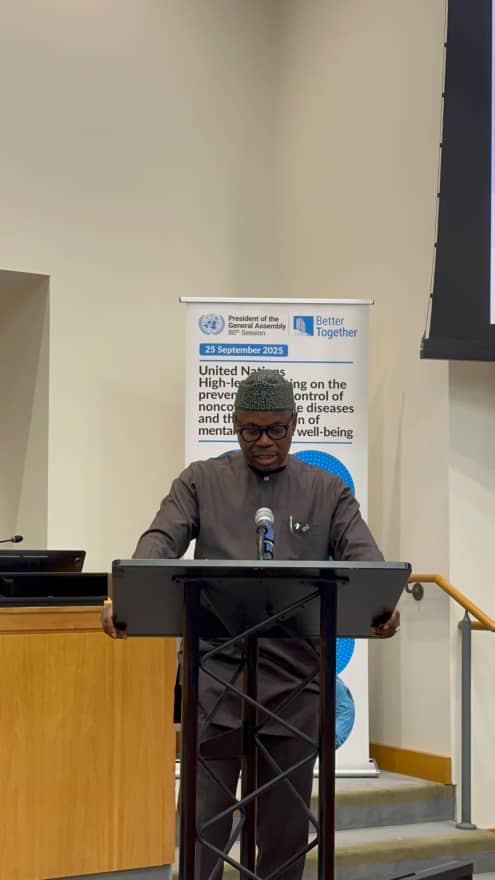
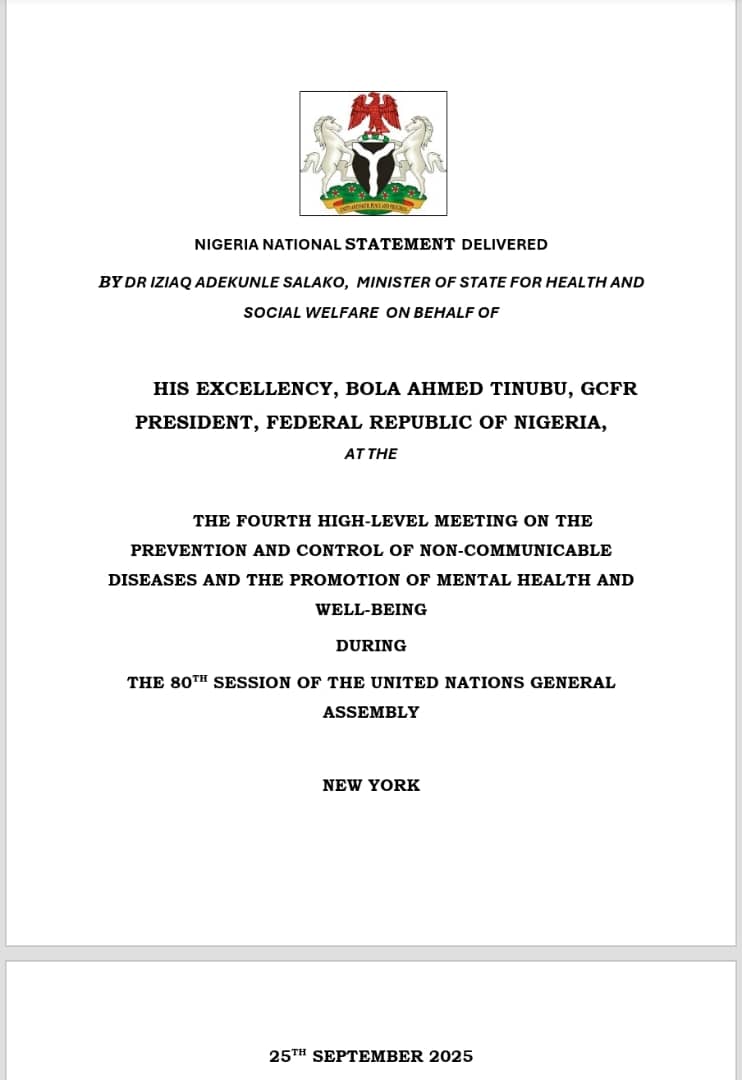
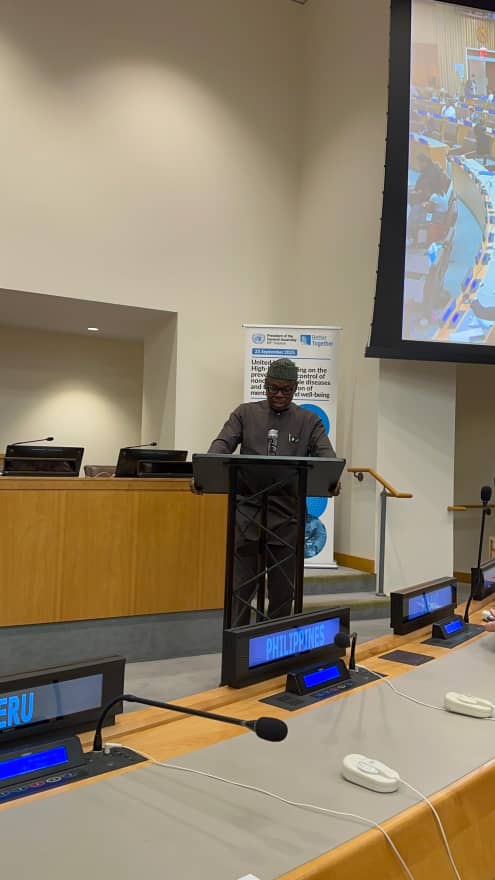
Nigeria’s President, Bola Ahmed Tinubu, has said Nigeria is a nation of great diversity with very vibrant and resourceful people which understands the growing burden of Non-communicable Diseases (NCDs) and the critical importance of mental health but needs global collaboration to sustain prevention and control. This was contained in his address delivered at the fourth High-Level meeting on prevention and control of NCDs and the promotion of mental health well-being during the 80th session of the United Nations General Assembly in New York, United States of America (USA).
Represented by Dr. Iziaq Adekunle Salako, the Minister of State for Health and Social Welfare, Tinubu said for many developing countries including Nigeria, NCDs are rising even as infectious diseases persist. He said troubling is the growing prevalence of NCDs among the young, leading to the loss of productive years and negative economic impacts. In 2025, NCDs are the leading cause of morbidity and mortality worldwide, accounting for nearly 29 percent of all deaths in Nigeria.
“Nigeria has made significant progress. We have developed a National NCD Policy and a Multisectoral Action Plan; established prevention and treatment guidelines; introduced targeted laws to address key risk factors, strengthened primary health care; expanded health insurance including for catastrophic diseases; built capacity among health professionals; and increased awareness campaigns. We have built 6 cancer centers of excellence and immunized more than 14 million of our adolescent girls ( about 96% of target population) against HPV to protect them against cervical cancer. Our task-shifting and referral policies have also helped extend services to more communities”, Tinubu noted.
He said Nigeria also recognizes that mental health is integral to overall well-being, productivity, and social cohesion. “Our 2023 Mental Health Act provides a national framework for mental health promotion, service delivery, and the protection of the rights of persons with mental health conditions. We have developed a national suicide prevention strategy with focus on decriminalisation, destigmatization and integrated mental health services into PHC. This is being done with special attention to the most at risk, the vulnerables and the underserved.”

He said the country continues to face funding gaps, limited infrastructure, and the need for stronger data collection on NCDs and mental health.
“Nigeria stands ready to collaborate with international partners, civil society, and the private sector to amplify our efforts. We endorse accelerated action to close gaps in access to medicines and technologies for NCD care, and we call for greater investment in public health infrastructure and human resources, particularly at the primary health care level. We also call for a whole of government approach that adequately involves law makers for needed legislative, regulatory and fiscal measures. In addition, we call for more visibility and global attention to sickle cell disease.
“Nigeria is committed to building on our progress: strengthening our health systems, prioritizing prevention, and ensuring mental health receives the prominence it deserves within our national agenda. With global solidarity, shared best practices, and renewed investments, we can reduce premature mortality from NCDs by 2030 and promote mental health and well-being for all”, Tinubu concluded.