Salako Decries Health Workers Migration At UK Global Health Summit
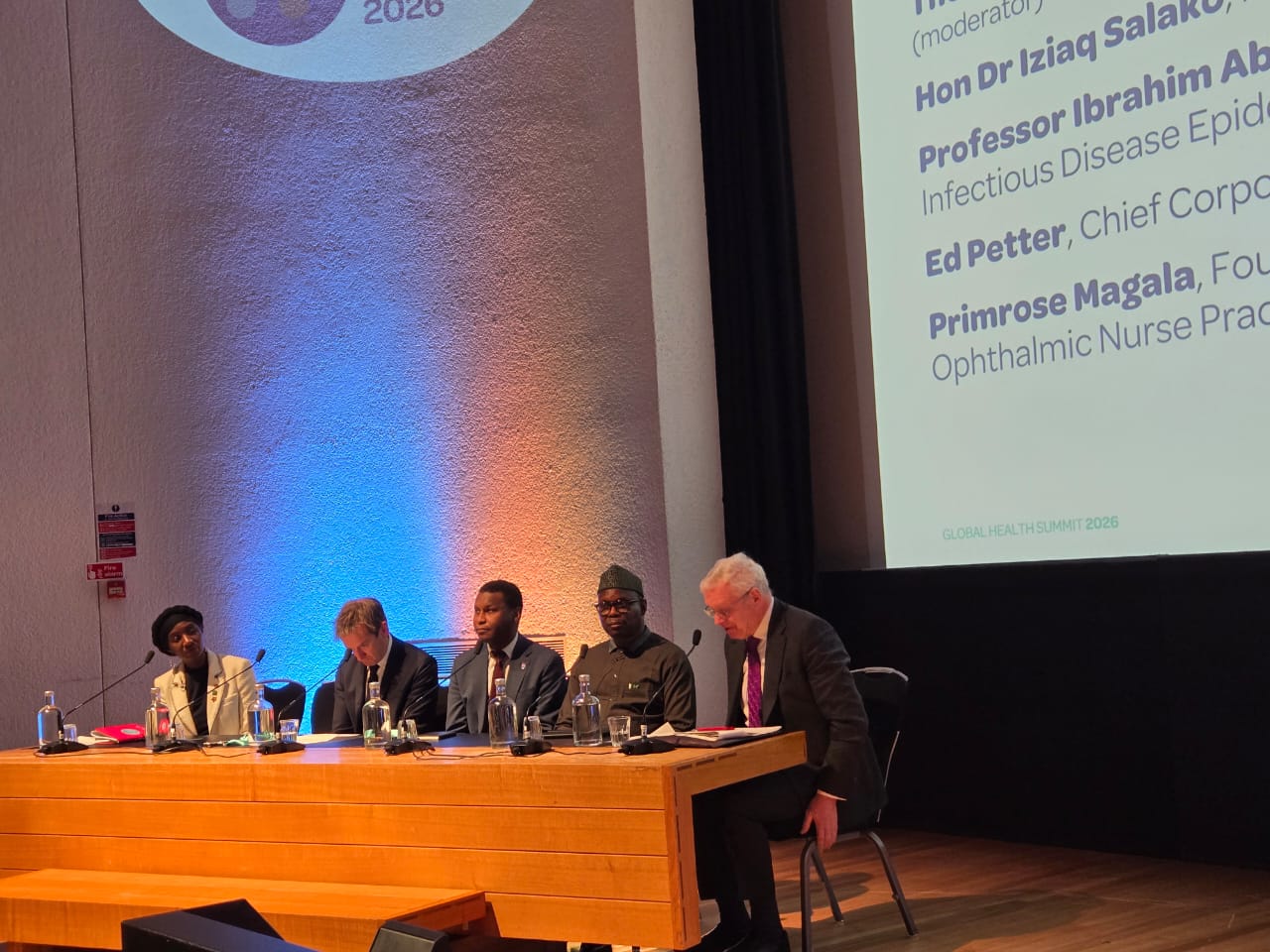
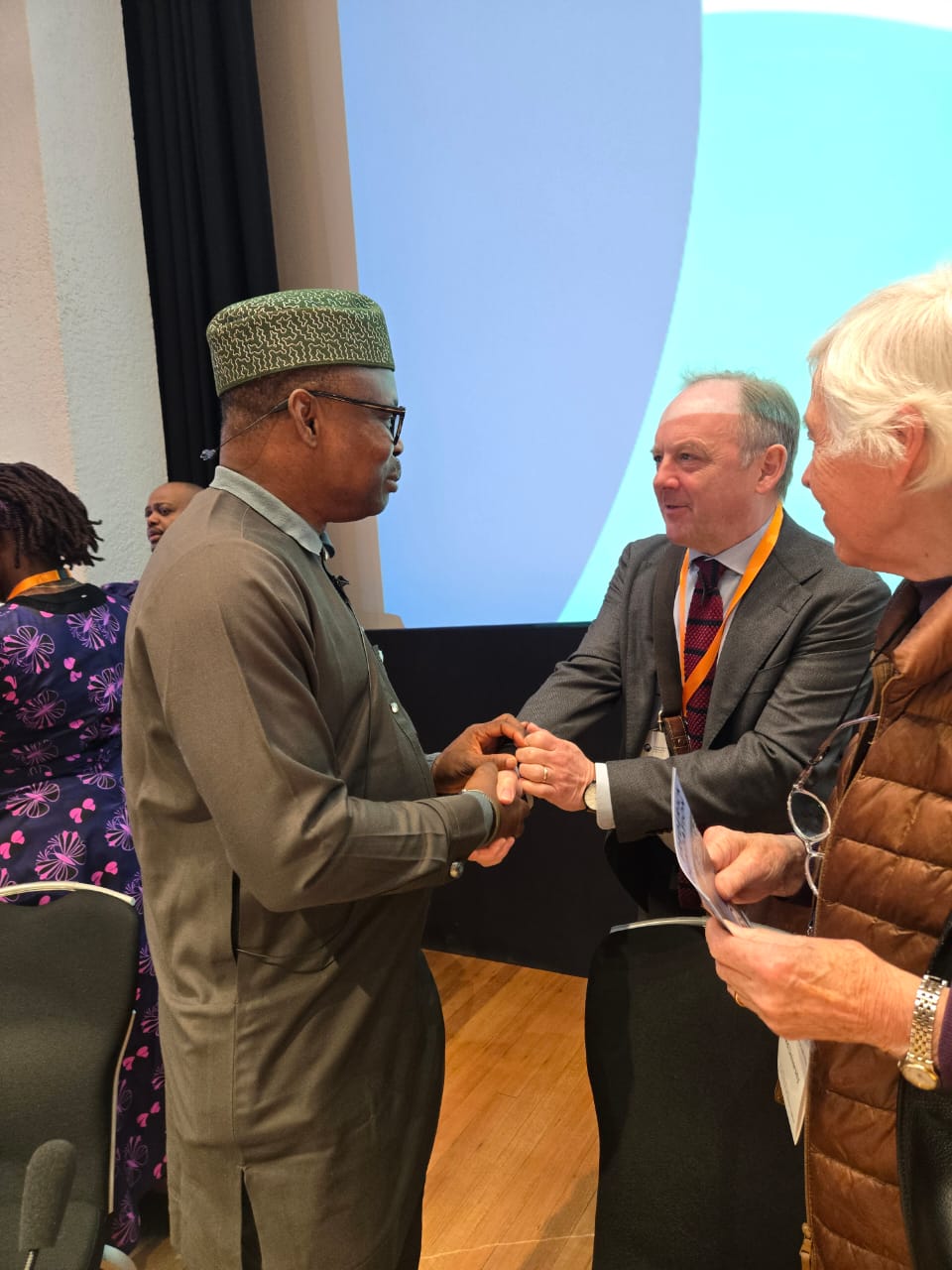
Nigeria’s Minister of State for Health and Social Welfare, DR. Iziaq Adekunle Salako has highlighted the multidimensional crisis facing global health in our modern world including the mass exodus of health workers from countries like Nigeria to other nations such as the United Kingdom which is compounding health system challenges. Salako, was the keynote speaker at the 2026 UK Global Health Summit held at the Royal College of Physicians, London under the theme “Shaping Tomorrow’s Health, Together. He called for a new “compact on health workforce mobility, a managed migration agreement with clear terms and KPIs” including compensation for source countries, joint training programmes, managed circular migration and investment in health training infrastructure in countries of origin.
Salako said the world today is contending with a convergence of financial, political, climatic, and demographic pressures that are reshaping the landscape of global health in ways we have not seen in our modern world.
“Financially, the global economy remains fragile being worsened by wars. The International Monetary Fund, in its 2026 World Economic Outlook, forsee global growth slowing down to between 2.7 – 3.1%, below pre-pandemic levels, constrained by high debt, persistent trade tension and structural weaknesses. Sub-Saharan Africa is particularly facing headwinds from debt distress, inflationary pressures, and reduced fiscal space for social spending. For many low- and middle-income countries, including Nigeria, the cost of servicing external debt now rivals or exceeds expenditure on health and education combined, thus constraining our capacity to invest in the health infrastructure our people so desperately need.
“Politically, with age-long multilateral health cooperation witnessing unprecedented strains, the trend is a retreat from multilateral cooperation compounded by rising geopolitical tensions, and, in certain instances, aids are being exploited for strategic inroad into developing countries health data and national resources which creates concerns about national sovereignty and the turning down of aids desperately needed. The consequences are felt most acutely in regions like ours, where external development assistance for health has historically constituted a significant share of total health expenditure, and as these assistance plumet, the burden of disease has continued to grow with risk of reversed gains.
“Climatically, the health impacts of environmental change are no longer theoretical. The 2025 Lancet Countdown on Health and Climate Change reported that heat related mortality has increased by 23% since 1999, droughts and heatwaves caused additional 123.7 million people to face moderate to severe food insecurity, and exposure to wildfire smoke caused an estimated 154,000 deaths in 2024 alone. In Nigeria, changing rainfall patterns, desertification in the north, pollution and flooding in the south are driving food insecurity, strifes, displacement, and the spread of vector-borne diseases to new ecological zones”, the Minister noted.
Salako said Africa stands at a unique crossroads looking at its demography. “The continent’s population is projected by the United Nations to reach approximately 2.5 billion by 2050, with Nigeria alone expected to surpass 400 million people, becoming the third most populous nation on earth. This demographic trajectory presents both an extraordinary opportunity, in the form of a youthful, dynamic population, and an extraordinary challenge, in the form of health systems that must scale rapidly to meet surging demand.”
“The magnitude of the impact of these changes on our health system is undeniably grave. Nigeria’s health system, like those of many nations in the global South, is confronting pressures on these multiple fronts and others development related areas including underfunding, infrastructural deficit, high out of pocket expenses for health and rural urban disparity. Then, there is the question that, perhaps more than any other, brings us to this summit today: health workforce crisis compounded in develooing countries by unregulated migration.
“The global health workforce crisis is not a future threat, but a present emergency. The World Health Organization has projected a global shortfall of ten (10,000,000) million health workers by 2030, with the most acute deficits concentrated in sub-Saharan Africa and South-East Asia. The WHO Global Health Workforce Statistics indicate that Africa, which bears more than a quarter of the global burden of disease, commands less than three per cent of the global health workforce and less than one per cent of global health expenditure”, Salako added.
He said Nigeria, the most populous nation in Africa, sits at the very centre of this crisis. This because Nigeria’s physician-to-population ratio stands at approximately 4 physicians per 10,000 population, compared with the WHO’s recommended minimum of 10 physicians per 10,000 persons. For nurses, midwives, pharmacists, laboratory scientists and other health professionals, the picture is similarly stark. Despite concerted efforts to bridge this gap, the Minister said Nigeria’s health workforce remains insufficient for a population of its size, growth rate and disease burden.
“The emigration of trained health professionals, which is often termed brain drain or “japa”, has compounded this challenge. A 2023 report by the NOIPolls and Nigeria Health Watch found that approximately 57% of Nigerian doctors surveyed had taken concrete steps towards emigrating. Between 2021 – 2022 alone (based on data from the UK Government), about 13,609 Nigerian health workers migrated to UK making Nigeria one of the top source countries in the world.
“While as a country, we will not obstruct our citizens from the pursuit of better opportunities, there is the compelling need to be comprehensive and whollistic in looking at all the sides of the issue and evaluating the consequences. Every doctor, every nurse, every midwife, every health worker who leaves Nigeria represents a substantial flight of invested public resources, often exceeding $200,000 (Approximately N280,000,000) per physician trained, according to estimates by the African Union that is effectively transferred from one of the world’s poorest health systems to a wealthy country like the UK. In my Yoruba dialect, we call such “agbalowomeri” meaning the rich who takes from the poor. This is not merely a health workforce issue, It is a question of global equity, a moral question, and it demands a global response”, Salako stated.
He said, Nigeria, under the leadership of President Bola Ahmed Tinubu has adopted a multi-pronged approach to addressing both the quantity and quality of health workforce. The Federal Ministry of Health, in collaboration with the National Universities Commission and regulatory bodies like the Medical and Dental Council of Nigeria, has expanded the number of accredited health workers training institutions in order to produce more. There has also been about 160% increase in the number of new intakes to the medical school between 2023 and end of 2025. A similar increase is being witnessed in the training of nurses, midwives, pharmacists, laboratory scientists and other core professionals.
“We have also invested in the establishment and strengthening of schools to train para-medical professionals recognising that a resilient health system must rest on a broad and diverse workforce. Additionally, we have introduced and scaled innovative task-shifting and task-sharing models, in line with WHO recommendations, to optimise the contributions of community health extension workers, community health officers, and pharmacy technicians. We are taking decisive steps to address the conditions of service of health workers, a key push factor while also improving the welfare and training conditions of resident doctors and other specialists in training.
“We believe that Nigerian health professionals in diaspora are not totally lost to the country and we therefore value them as assets for bridge building, and, partnership. Recognising that across the United Kingdom, and other developed nations, Nigerian-trained health professionals are delivering care of the highest standard, conducting groundbreaking research, leading institutions, and accumulating expertise and experience, we are deliberate in building mechanisms that can be used to channel back in order to strengthen the health system at home”, the Minister noted.
He called for a new compact on health workforce mobility, a Managed Migration Agreement with clear terms and KPIs. He said the current model, in which low-income countries invest in training and high-income countries reap the benefits, is neither sustainable nor just.
“We propose structured bilateral and multilateral agreements that include compensation for source countries, joint training programmes, managed circular migration pathways that allow health workers to gain experience abroad and return with enhanced skills, and investment in health training infrastructure in countries of origin. We call for increased and innovative health financing. The Abuja Declaration target of 15% of national budgets allocated to health remains a benchmark that most African nations, including Nigeria, have not consistently met. We recommit to this target and call upon international partners to complement domestic investment with predictable, flexible, and aligned development assistance. We also urge the expansion of innovative financing mechanisms, including health bonds, blended finance, and public-private partnerships, to mobilise the capital needed for health infrastructure, digital health, and workforce development.
“We call for the full integration of diaspora health assets into national and global health strategies. The Nigerian health professionals in diaspora, estimated at not less than 150,000 globally, represents a reservoir of skills, knowledge, networks, and capital that can accelerate health system strengthening. We invite destination countries, international organisations, and diaspora associations to join us in formalising and scaling the programmes of engagement that are already bearing fruit. We call for a renewed commitment to health research and innovation, with a focus on equity. The global research ecosystem must be restructured so that the priorities, perspectives, and intellectual contributions of low- and middle-income countries are fully represented.
“Nigeria calls for solidarity. Not the solidarity of sympathy, but the solidarity of shared interest. The next pandemic, the next antimicrobial resistance crisis, the next climate-driven health emergency will not respect borders, passports, or income levels. Our collective security depends on the strength of the weakest link in the global health chain. Investing in Nigeria’s health system, in Africa’s health systems, is not altruism. It is enlightened self-interest”.