
Nigeria To Build A Climate-resilient Health System Anchored on Green Energy Deployments
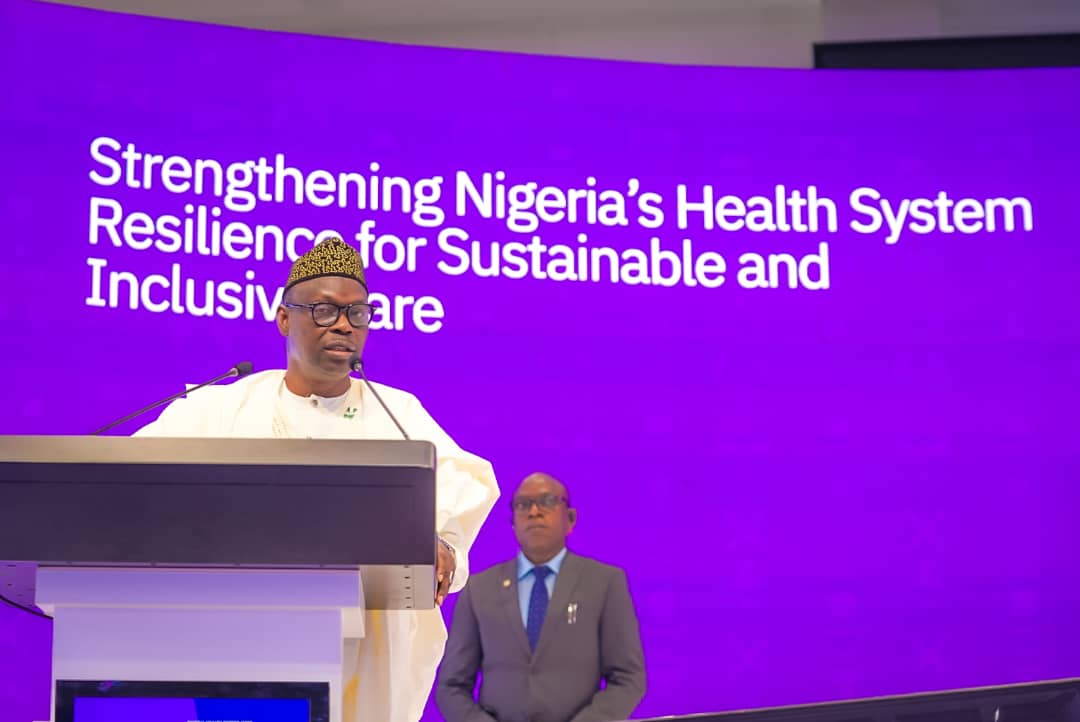
The Federal Government of Nigeria has indicated its readiness, as part of a long-term sustainability plans, to prioritize building a climate-resilient health system anchored on green energy deployments, including solar, gas, and hydrogen-powered energy systems. The FG also hopes to use the carbon credits obtainable from these initiatives to further finance the resilient health system enablers in health facilities across the nation. This was stated by the Minister of State for Health and Social Welfare, Dr. Iziaq Adekunle Salako, on Thursday, November 13, at the 2025 Joint Annual Review Meeting (JAR) of the Ministry held at Transcorp Event Center, Maitama, Abuja.
Nigeria’s Joint Annual Review (JAR) of the Ministry of Health is a significant event that brings together stakeholders to assess progress and set new priorities for the health sector. The 2025 JAR, themed “All Hands, One Mission: Bringing Nigeria’s Health Sector to Light,” highlights notable achievements, including Reduced Maternal Deaths, A 17% reduction in maternal deaths and a 12% decline in newborn deaths across 172 high-burden local government areas. The JAR serves as an accountability platform, promoting transparency and data-driven decision-making to improve Nigeria’s health outcomes.

According to the 2023 Nigeria Demographic and Health Survey (NDHS) preliminary results; Maternal Mortality Ratio stands at 512 deaths per 100,000 live births (down from 576 in 2018), Under-5 Mortality Rate stands at 110 deaths per 1,000 live births (a reduction from 132 in 2018), Neonatal Mortality is at 41 deaths per 1,000 live births, Skilled Birth Attendance is up from 43% in 2023 to 53% (up from 43% in 2018), Full Immunization Coverage at 39% is an improvement from 31% in 2018 and Modern Contraceptive Prevalence is at 20% among currently married women.
Government health expenditure is 5.2% of GDP (2025), far below the 15% Abuja Declaration minimum, Per Capita Health Expenditure is approximately $43 USD from all sources (2024). Though the National Health Insurance Coverage has grown to approximately 10-12% of the population, out of pocket expenditure for health remains as high as 71% and external financing dependency stood at 21% of total health expenditure. These figures underscore the twin challenges of insufficient investment and catastrophic health expenditure that push millions of Nigerians into poverty annually.
Over 30,000 PHCs are still not optimally functional as of the 2023 assessment. Doctor-to-Population Ratio is 1:5,000 (against the WHO recommendation of 1:600), while Nurse-to-Population Ratio is as low as 1:2,000 (against the WHO recommendation of 1:300). This is further compounded by the inequities in the distribution of health workers, where 75% are concentrated in urban areas, serving 45% of the population.
While these figures above show some improvement over the last few years, Salako said they remain not complimentary enough for Nigeria’s stature, resources and ambition. Nigeria still accounts for approximately 14% of global maternal deaths and 9% of global under-5 deaths, despite representing only 2.6% of the world’s population, he added.

He however noted that the government of President Bola Ahmed Tinubu is fully aware of these challenges and has been making concerted efforts in partnership with state and local governments, development partners, and civil society to accelerate progress and deliver a health system that will optimally serve all Nigerians.
“We are fully conscious of the issues at stake and in the last 30 months of this administration, we have implemented a coordinated set of programs and interventions towards attaining a resilient health system for Nigeria in line with the Renewed Hope Agenda. The Nigerian Health Sector Renewal Investment Initiatives (NSHRII) being driven on the strategic imperative of a Sector Wide Approach (SWAp) to ensure efficient, collaborative, synergistic and non-siloed implementation is designed to deliver a health system that is prepared for, respond to and recover from shocks – a resilient Nigerian health system. I wish to share with you some of the ongoing coordinated interventions under the NSHRII:
“The Basic Health Care Provision Fund (BHCPF), since its operationalization in 2019, has transformed primary healthcare delivery. We have built on this, and the BHCPF represents our most significant domestic investment in Primary Health Care, and I commend the BHCPF Gateways (NPHCDA, NHIA, NCDC) and the MOC secretariat for the better coordination and the improved absorption capacity, rising from 45% in 2019 to 78% in 2023. The National Health Insurance Authority (NHIA) Act 2024 marked a paradigm shift toward Universal Health Coverage. We have witnessed increased enrollment into the insurance pool of care, and the state insurance schemes have contributed in no small way to improving the number of persons benefiting from pooled insurance care and access at both the National and subnational levels. Through the formal sector enrollment, the vulnerable group program, and the BHCPF integration pathways, over 20 million persons have been enrolled into care through insurance mechanisms.

“The convergence of BHCPF and NHIA represents a powerful mechanism for achieving UHC, but we need accelerated state-level implementation and enforcement of mandatory health insurance provisions for all Nigerians. Thanks to President Tinubu’s recent executive order on mandatory implementation across MDAs including for entities involved in public procurement and the defined benefit scheme for retirees, we forsee a significant acceleration and exceeding our 2027 target of 20% coverage.”
The government has also focused largely on strengthening primary health care systems through several mechanisms and programs. The National Primary Health Care Development Agency (NHPCDA) and its state counterparts are expanding geographical captive areas for health facilities and access to basic health care. According to Salako, working with the World Bank and other partners, significant strides are being made; State-level PHC boards have been strengthened in 31 states, and the PHC governance structures in more than 400 LGAs have been fully established and functional. PHCs are being upgraded with physical renovation, basic equipment supplies, and additional deployments which have seen the quality score of our PHCs improve from 42% to 67% baseline to endline assessment.
As part of improving the resilience of the health system, Salako said several health infrastructure developments are going on concurrently with over 500 high impact infrastructural projects delivered so far and many more ongoing.
“A key innovation implemented in this respect is the Power for Health Initiative, designed to ensure that our facilities have reliable electricity to power excellent and sustainable health service delivery. We have convened a National dialogue to advance this course, we have a clear implementation plan, and we are confident that the necessary investment to actualize this agenda from both the government and the private sector will be mobilized. We have inaugurated the Nigeria Digital in Health Initiative (NDHI) Implementation Committee, which laid the groundwork for coordinated action across all stakeholders. Building on that momentum, we secured the endorsement of the National Council on Health (NCH) for the nationwide implementation of the NDHI. This high-level mandate led to the development of National Digital Health Architecture (NDHA), a unified blueprint that ends the era of fragmentation and establishes clear, sustainable “rules of the road” for all partners within Nigeria’s digital health ecosystem. We are also building the foundational “digital highways” like the Health Information/Claims Exchange with Shared Health Record, National Health Registries – the Health Client Registry, Health Facility Registry, and Healthcare Worker Registry, which will provide a single source of truth for identity, service delivery points, and workforce information across the health sector.”
The Minister said despite these commendable progress made so far, significant challenges impede government’s march toward health system resilience.
“The challenges are multifaceted, ranging from funding gaps, existing fragmentation and coordination challenges that are yet to collapse, the persistent and threatening human resources crisis of brain drain, top-heavy workforce, frequent industrial actions, inequalities in urban-rural distribution of health workforce, sub-optimal quality of care standardization, supply chain vulnerabilities, infrastructural deficit, high out of pocket expense for health and so on . However, we have refused to be defined by our challenges; rather, we have taken a determined stance change the narrative, now, once and for all.
“Our HRH remains a strategic asset that we will continue to invest in to sustain, expand, and secure. The distribution inequalities will be frontally addressed through initiatives like the rural retention incentives. To further strengthen the capacity for specialist care, we will concretize our Diaspora engagement plans to further convert the previously tagged brain drain to brain gain and “JAPA” to “JAPADA”.
“As part of our long-term sustainability plans, we will prioritise building a climate-resilient health system anchored on green energy deployments, including solar, gas, and hydrogen-powered energy systems. We also hope to use the carbon credits obtainable from these initiatives to further finance the resilient health system enablers in our facilities.”