
FG States Why All The Demands of Resident Doctors Cant Be Met
The Federal Government has explained why it has not been able to meet some of the demands that have led to threats of industrial action by the National Association of Resident Doctors (NARD).
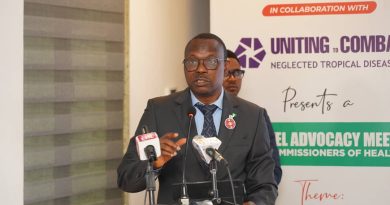
Dr Iziaq Salako, Minister of State for Health and Social Welfare, stated this on Tuesday in a statement by Mr Alaba Balogun, the Director of Information and Public Relations of the Ministry.
According to him, the failure of the Federal Government to meet the demands of the resident doctors is rooted in structural and policy issues within the health sector, rather than neglect by the administration.
The Minister said the government has demonstrated commitment to improving the welfare of health workers through recent reforms, including an upward review of professional allowances worth about ₦90 billion annually.
The minister said the revised allowances, approved in November 2025, cover call duty, shift duty, non-clinical duty and rural posting allowances, and were negotiated jointly with all health professional groups.
“Past negotiations were often fragmented, with different health professional groups engaging government separately, leading to conflicting agreements on pay parity and relativity and triggering repeated industrial actions,” he said.
He said the current administration has adopted a collective bargaining approach to ensure inclusiveness and reduce conflict.
The minister explained that while the government remains committed to improving healthcare workers’ remuneration, such reviews must be balanced against competing national priorities including education, security and infrastructure.
On NARD’s current demands, he said the association’s request list has reduced from 19 to nine items, which he described as progress in ongoing engagements.
He, however, noted that some demands are limited by existing public service rules and approved schemes of service.
On the demand for specialist allowance for resident doctors, he said residents remain specialists-in-training and that the allowance is currently reserved for consultants in line with regulations.
He added that the National Salaries, Incomes and Wages Commission had warned that extending the allowance could trigger similar claims from other categories of workers undergoing specialist training.
On reported delays in certification, he said the National Postgraduate Medical College does not issue certificates after Part I examinations and that the Ministry cannot override the institution’s policy.
Commenting on the disengagement of five resident doctors in Lokoja, Salako said the action resulted from civil service disciplinary processes.
He said that a ministerial review has recommended reinstatement for two doctors, reprimand for two others, and a fresh hearing for one.
Salako assured Nigerians that the Ministry, in collaboration with the Ministry of Labour and other stakeholders, remains committed to sustained dialogue to stabilise the health sector and prevent disruptions to service delivery.
NARD represents medical doctors undergoing postgraduate training across teaching hospitals in the country.
Members of the association often engage in industrial action to press for improved working conditions, timely payment of allowances, and parity in remuneration with other health professionals.
(NAN)