BAT Nigeria, Stanbic IBTC Champion AI-Driven Sustainability at 2026 Private Sector ESG Forum Masterclass
British American Tobacco Nigeria (BAT Nigeria) and Stanbic IBTC Bank have reinforced the private sector’s role in advancing sustainable development through technology, bringing together business leaders, sustainability professionals and technology experts at the 2026 Private Sector ESG Forum Masterclass to examine the transformative potential of Artificial Intelligence (AI).
The virtual masterclass, held on Thursday, 29 October, 2026, under the theme, “Artificial Intelligence: Implications for Sustainability and the Future,” explored how AI can accelerate climate action, strengthen environmental management, reshape the workplace and promote inclusive economic growth. Organised under the auspices of the Private Sector ESG Forum, the engagement also served as a curtain-raiser for the Forum’s full summit scheduled for the first quarter of 2027.
Speaking at the event, Tosin Leye-Odeyemi, Chairman of the ESG Forum, called for a more responsible and inclusive approach to AI adoption, stressing that businesses must look beyond technological efficiency to consider the environmental footprint and broader social implications of emerging technologies. She emphasised that credible sustainability decisions must account for AI’s energy and water consumption, data integrity and governance, as well as the fundamental questions of who benefits from technological advancement and who remains accountable for its consequences.
“Artificial Intelligence presents enormous opportunities to accelerate sustainable development, but its adoption must be guided by responsibility, accountability and inclusion. We must interrogate not just what AI can do, but the environmental resources it consumes, the people it serves and the impact it ultimately delivers. Technology must advance sustainability without creating new inequalities or compromising the interests of the communities it is intended to benefit,” she said.
The masterclass featured two panel sessions. The first, “AI, Climate Action and Environmental Sustainability — From Data to Decarbonisation,” was moderated by Kingsley Nnadozie, Head, Sustainability and ESG, Stanbic IBTC Bank, with contributions from Debola Ibiyode of Carbon AI, climate advocate Olumide Idowu and Dr Adebola Odunsi of Carbonivity.
Discussions examined AI applications in climate early-warning systems, carbon markets, waste classification, recycling and environmental data management, with panellists emphasising the importance of reliable local data, expert validation and measurable outcomes.
The second session, “AI, Social Impact and the Future of Work — Inclusion, Skills and Human Development,” moderated by Oreva Atanya, Director, LBS Sustainability Centre, featured Dr Ehia Erhaboh of AI in Nigeria and Dr Dipo Awojide. It examined workforce transformation, future-ready skills, reskilling, digital inclusion and the need for organisations to prepare employees for an AI-driven economy.
Commenting on BAT Nigeria’s participation, Mrs Ruth Owojaiye, Director, Corporate and Regulatory Affairs, BAT Nigeria, said the discussions aligned with the company’s focus on embedding innovation, operational efficiency and environmental responsibility into its business practices.
“At BAT Nigeria, we recognise that digital transformation and sustainability are increasingly interconnected. The application of data and emerging technologies can improve operational efficiency, optimise resource utilisation and strengthen environmental performance. However, meaningful progress requires that innovation is supported by responsible governance, human expertise and a clear commitment to measurable impact. Our participation in this masterclass reflects the value we place on stakeholder collaboration and continuous learning in advancing these priorities,” she said.
BAT Nigeria’s sustainability initiatives include the transition of 100 per cent of its operations to Compressed Natural Gas (CNG), the installation of a 1.4-megawatt solar system at its Ibadan factory, zero waste to landfill since 2021 and a 99 per cent waste recycling rate since 2023. The factory has also maintained Alliance for Water Stewardship certification since 2022 and reduced freshwater withdrawal by approximately 42 per cent.
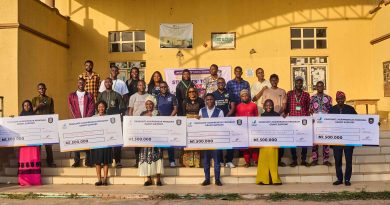
The masterclass concluded with the graduation of 18 Young Professionals Forum mentees, selected from more than 100 applicants, following a six-month mentorship programme. The graduates were encouraged to translate their learning into practical action and extend the benefits of mentorship to others.
The masterclass also sets the stage for the Private Sector ESG Forum’s 2027 summit, scheduled for the first quarter of the year. The summit will build on the discussions initiated during the masterclass, providing a platform for business leaders and other stakeholders to explore how emerging technologies, responsible governance and cross-sector collaboration can be translated into measurable sustainability outcomes.